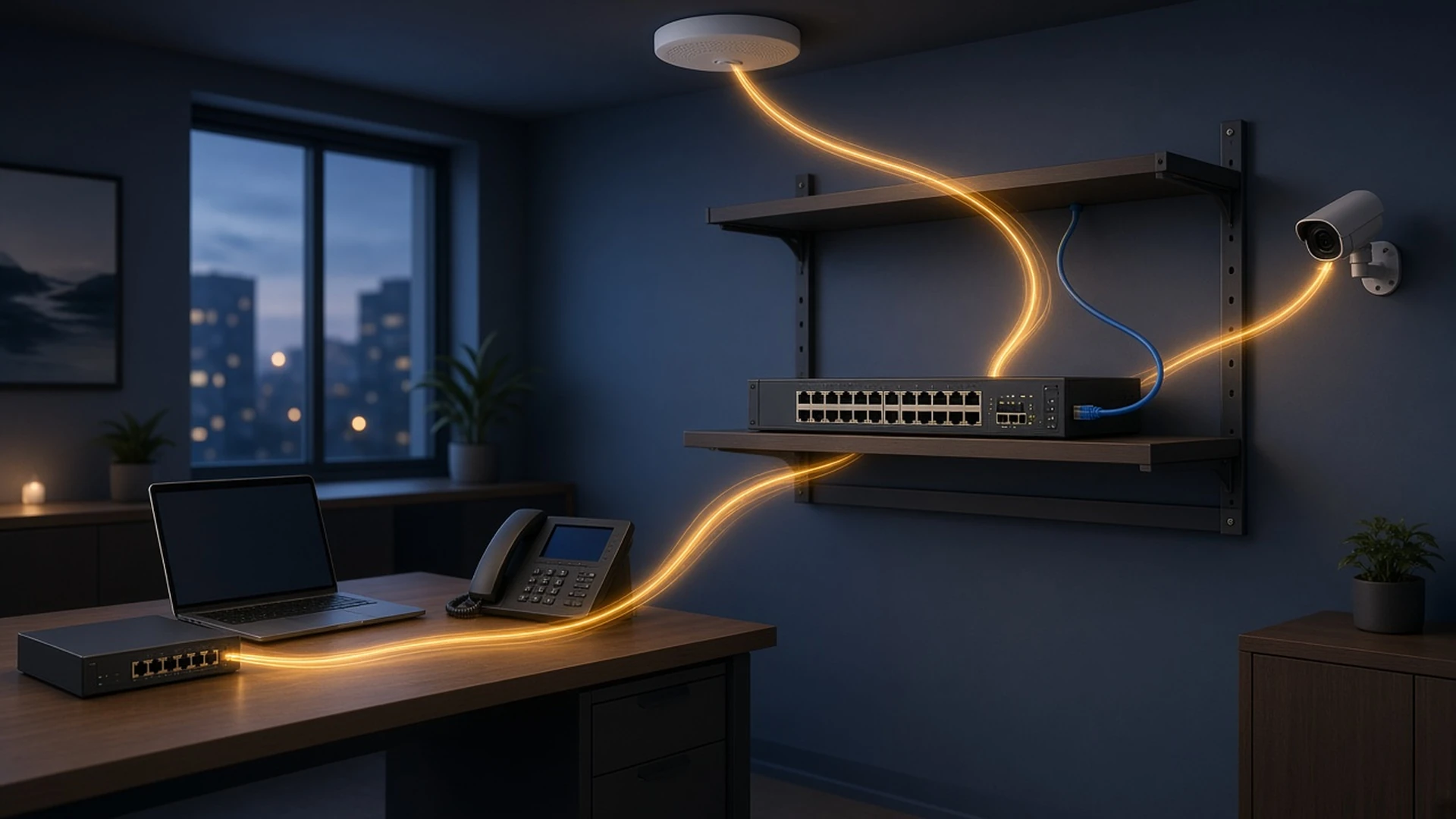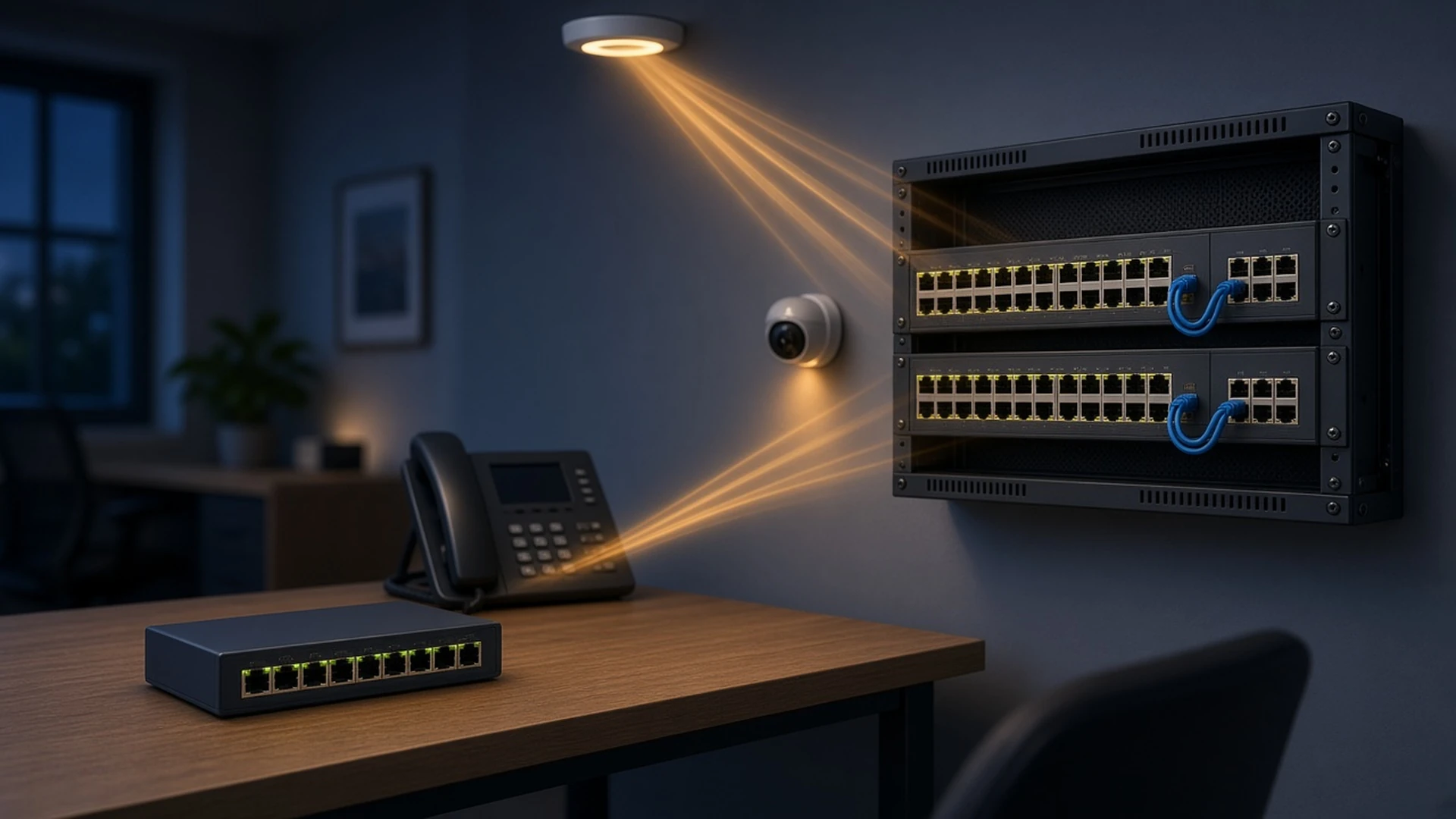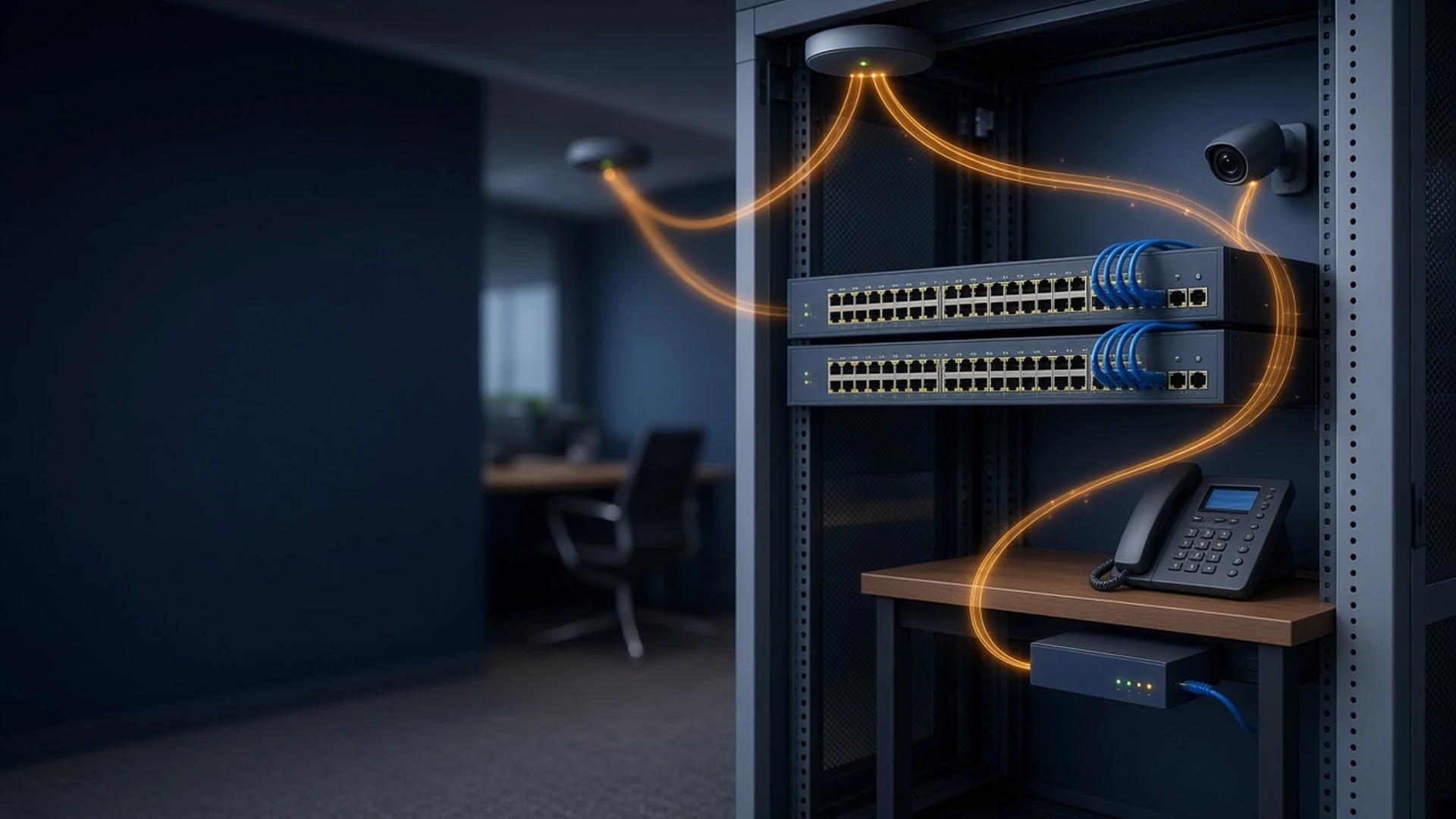
Choosing between Cisco Meraki MS and the Catalyst 9000 family is less about which chassis looks cheaper on a quote and more about how your enterprise wants to operate sites for the next five to seven years. Cloud-managed simplicity and deep campus feature sets solve different problems. Pick the ops model first, then the SKUs fall into place.
At M&F Collaboration, we help procurement and network teams shortlist both paths across our Cisco switches catalog — from Meraki MS series to Catalyst 9200, 9300, 9400, and 9500. This guide is a decision framework for enterprise sites, not a chassis bake-off.
What Meraki MS optimizes for
Meraki MS switches are built around a cloud operations model. Configuration, monitoring, firmware, and many troubleshooting workflows live in the Meraki dashboard. That design shines when you have many similar sites, limited on-site network staff, or a preference for subscription licensing and centralized visibility.
Where Meraki MS tends to win
- Branch and retail footprints — dozens or hundreds of similar IDFs with a small remote IT footprint.
- Lean ops teams — fewer CLI specialists; stronger preference for templates, alerts, and dashboard workflows.
- Predictable licensing — hardware plus Meraki license term; budgeting is often clearer for finance than layered DNA/Catalyst Center packages.
- Fast standardized rollouts — claim, assign network, apply template; less per-closet snowflake config.
Meraki is not “the light enterprise option” in every design. Higher-end MS platforms support serious PoE and uplink needs. The trade-off is architectural: you are committing to Meraki’s cloud ops and license lifecycle. If your org already standardizes on Meraki wireless and security appliances, MS often completes a coherent stack — browse related Cisco wireless access points when Wi-Fi is in the same refresh.
What Catalyst 9000 optimizes for
The Catalyst 9000 series (access through core) is Cisco’s primary campus switching platform for traditional and hybrid operations. Teams that live in IOS XE, Catalyst Center / DNA Center, on-prem monitoring, and granular feature licensing usually land here.
Series roles at a glance
- Catalyst 9200 — fixed access for many enterprise closets; strong default for straightforward PoE/access designs.
- Catalyst 9300 — workhorse stackable access with deeper uplink, mGig, and feature options; common when Wi-Fi 6/6E/7 and camera density are growing.
- Catalyst 9400 — modular chassis for distribution / larger campus nodes that need line-card flexibility.
- Catalyst 9500 — fixed core / aggregation for high-throughput campus backbones.
Stocked access examples on the store include platforms such as the C9200L-48PXG-2Y-E and C9300-48P-E — useful anchors when your design is already converging on Catalyst 9000 access.
Where Catalyst 9000 tends to win
- Large campuses — multi-layer designs with distinct access, distribution, and core roles.
- Deep feature and compliance needs — advanced segmentation, rich QoS, existing Catalyst operational playbooks, and auditor expectations tied to traditional campus platforms.
- Existing Catalyst skill and tooling — NOC already runs IOS XE, TACACS, on-prem NMS, and Catalyst Center workflows.
- Long-lived modular investment — 9400-style chassis where line cards and supervisors evolve over years.
If the conversation drifts into leaf-spine or fabric inside a data hall, that is usually a different buy — see Nexus 9000 rather than forcing Catalyst or Meraki into a DC role they were not designed for.
Decision matrix: which path fits your sites?
Use these five filters with both procurement and engineering in the room. When they disagree, document the reason — that note often saves a painful mid-project platform swap.
1. Site pattern
- Many similar branches / retail / clinics — Meraki MS is frequently the cleaner ops fit.
- One or few large campuses with dense closets — Catalyst 9000 usually maps better to layered design and stacking depth.
- Hybrid estate — campuses on Catalyst, branches on Meraki is a common and intentional pattern.
2. Staff skills and change windows
Ask who will own day-2 operations. If your team is dashboard-native and change windows are short, Meraki reduces friction. If senior engineers already automate IOS XE and have mature runbooks, Catalyst preserves that investment. Training cost belongs on the TCO sheet next to license term.
3. Compliance, air-gap, and tool standards
Some environments require on-prem management, restricted cloud egress, or integration with existing multi-vendor tools. Catalyst typically fits those constraints more naturally. Meraki assumes cloud connectivity for full operations — validate that with security and compliance before the RFQ.
4. Wi-Fi and PoE growth
Both platforms can deliver serious PoE for phones, cameras, and APs. The decision is whether PoE growth is paired with Meraki wireless (often a cohesive MS + MR plan) or with Catalyst-centric campus wireless designs. Align switch choice with the access point roadmap so you do not strand PoE budget or uplink capacity.
5. Multi-vendor and WAN edge context
If branch WAN edge is already a specific router or SD-WAN standard, keep switching decisions compatible with how you ship, stage, and support those sites. Browse Cisco routers only when WAN is in the same project — do not let an unrelated edge decision delay closet switching.
When a mixed Meraki + Catalyst estate makes sense
Many enterprises do not pick a single switch religion. A practical mixed model looks like this:
- Campus core / distribution on Catalyst 9400 or 9500 with Catalyst 9300/9200 access stacks.
- Remote branches on Meraki MS for standardized cloud ops and thinner local staffing.
- Clear ownership boundaries — separate templates, monitoring, and license renewals so neither platform inherits the other’s operational debt.
Mixed estates fail when teams pretend the platforms are interchangeable on the same change ticket. Keep BOMs, Smart Accounts / Meraki orgs, and acceptance tests partitioned. Your hardware partner can quote both in one RFQ as long as line items stay labeled by site and platform.
BOM implications (brief)
You do not need a full refresh BOM playbook here — we covered that in depth separately — but platform choice changes which line items matter most:
- Licensing — Meraki license term vs Catalyst / DNA feature tier and Smart Account destination.
- Optics — uplink form factor and reach; same discipline for both platforms — see transceivers.
- Stacking / virtual stacking — Catalyst StackWise kits and cable lengths vs Meraki stacking / virtual stacking options for the MS models you choose.
- Power — PoE budget and redundant PSUs sized for the AP and camera forecast, not only day-one draw.
For series selection fundamentals, pair this article with our Cisco switch buying guide. When you are ready to assemble chassis + licenses + optics as a complete ask, browse the live networking catalog and send a structured RFQ.
How to shortlist and RFQ with M&F Collaboration
- Freeze the ops model — Meraki cloud, Catalyst traditional/hybrid, or mixed by site type.
- Map sites to platform — campus vs branch; note PoE and uplink targets per closet.
- Shortlist series pages — start with Meraki MS and/or Catalyst 9200/9300/9400/9500 category pages.
- Add known PIDs when ready — for example access anchors like C9200L-48PXG-2Y-E or C9300-48P-E.
- Send the RFQ — include site counts, preferred condition (new vs refurbished), license ownership status, and target ship date via our RFQ form or contact page.
We return line-item quotes across switches, optics, and related accessories so procurement can compare platforms on total delivered scope — not chassis sticker price alone. Shipping and logistics details are on our shipping page when you need transit expectations for multi-site waves.
FAQ
Is Meraki MS or Catalyst 9000 better for enterprise campuses?
Large multi-layer campuses usually fit Catalyst 9000 better because of stacking depth, modular options, and traditional campus tooling. Meraki MS is often stronger for standardized multi-site access where cloud ops matter more than campus hierarchy.
Can we run Meraki MS at branches and Catalyst on campus?
Yes. That mixed model is common. Keep BOMs, licenses, and operational ownership separated by platform so renewals and change control stay clean.
Does Meraki always cost less than Catalyst?
Not reliably. Chassis price is only one line. Compare license term, optics, power, stacking, and operational labor. A lower switch unit price can lose if cloud licensing or spare strategy does not match your horizon.
Which Catalyst 9000 series should we shortlist first for access closets?
Most enterprise access refreshes start with Catalyst 9200 or 9300, then escalate to 9400/9500 for distribution and core. Confirm mGig, PoE, and uplink needs before locking PIDs.
What should we include in an RFQ so M&F Collaboration can quote accurately?
Site or closet list, platform preference (Meraki vs Catalyst vs mixed), port/PoE/uplink targets, license status, condition preference, and required ship window. PID lists help; series-level requirements are enough to start.
Where do we browse both platforms on the store?
Start at Cisco switches, then open the Meraki MS and Catalyst 9200/9300/9400/9500 category pages — or jump to a known PID when design is locked.