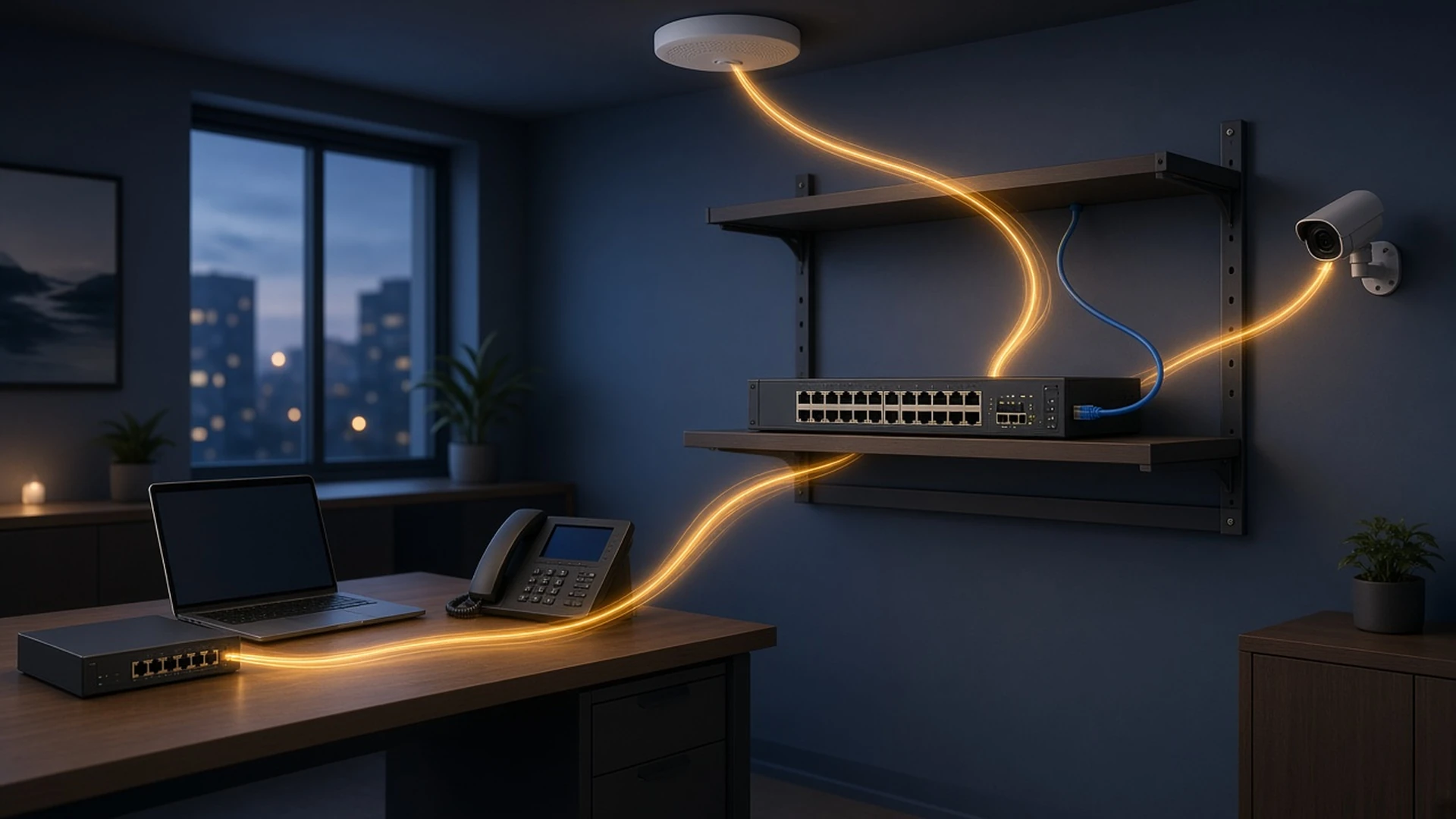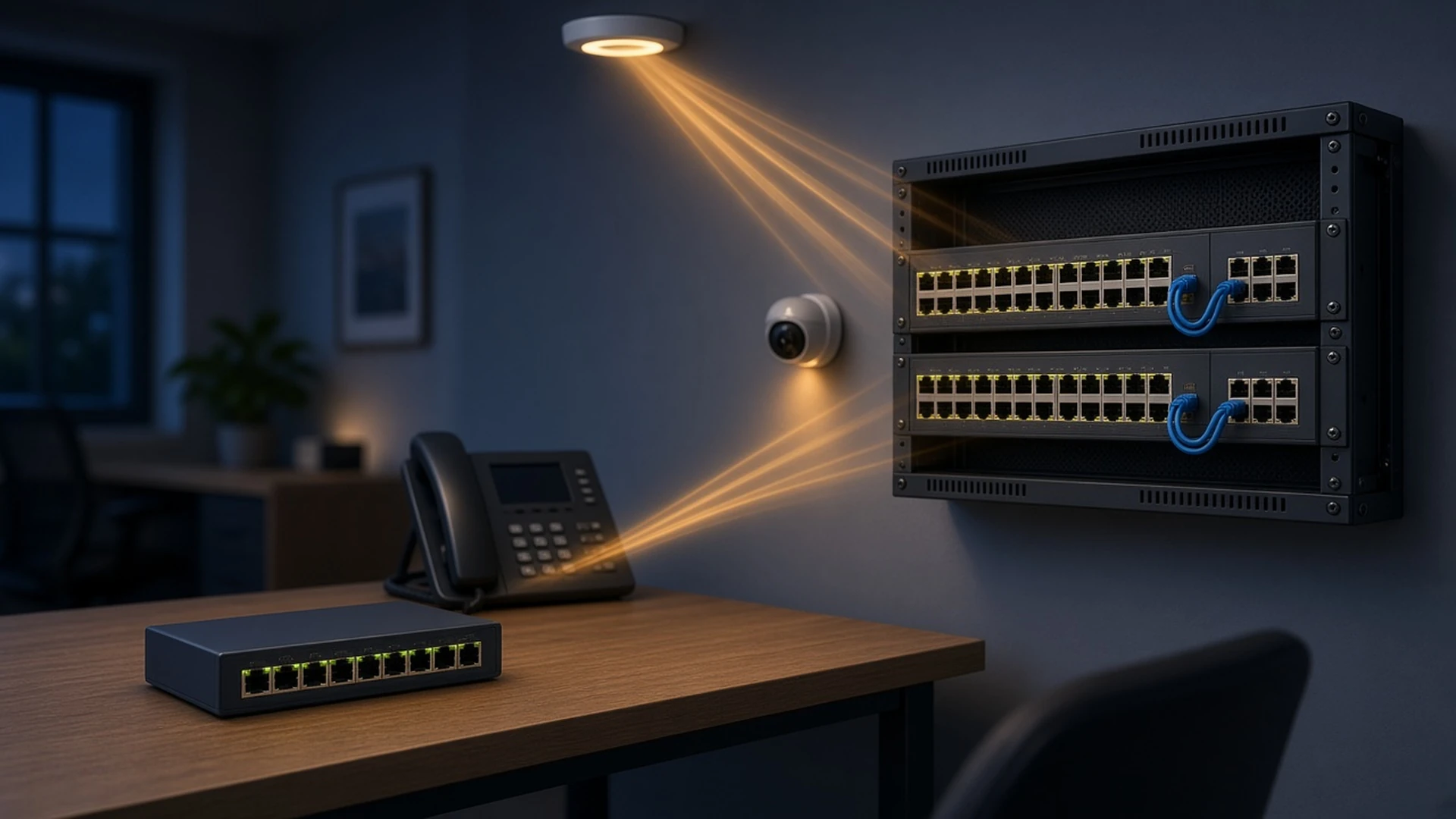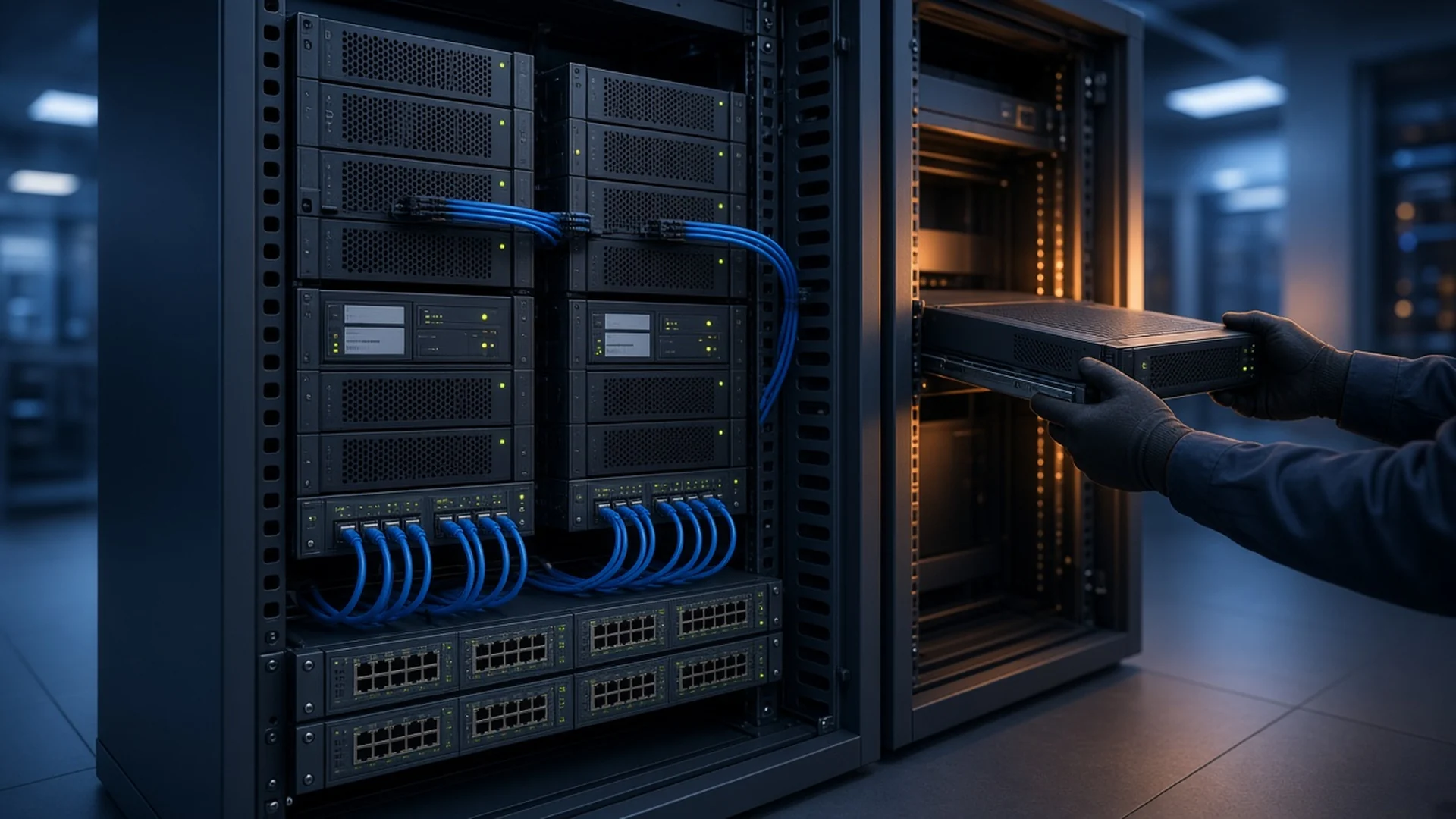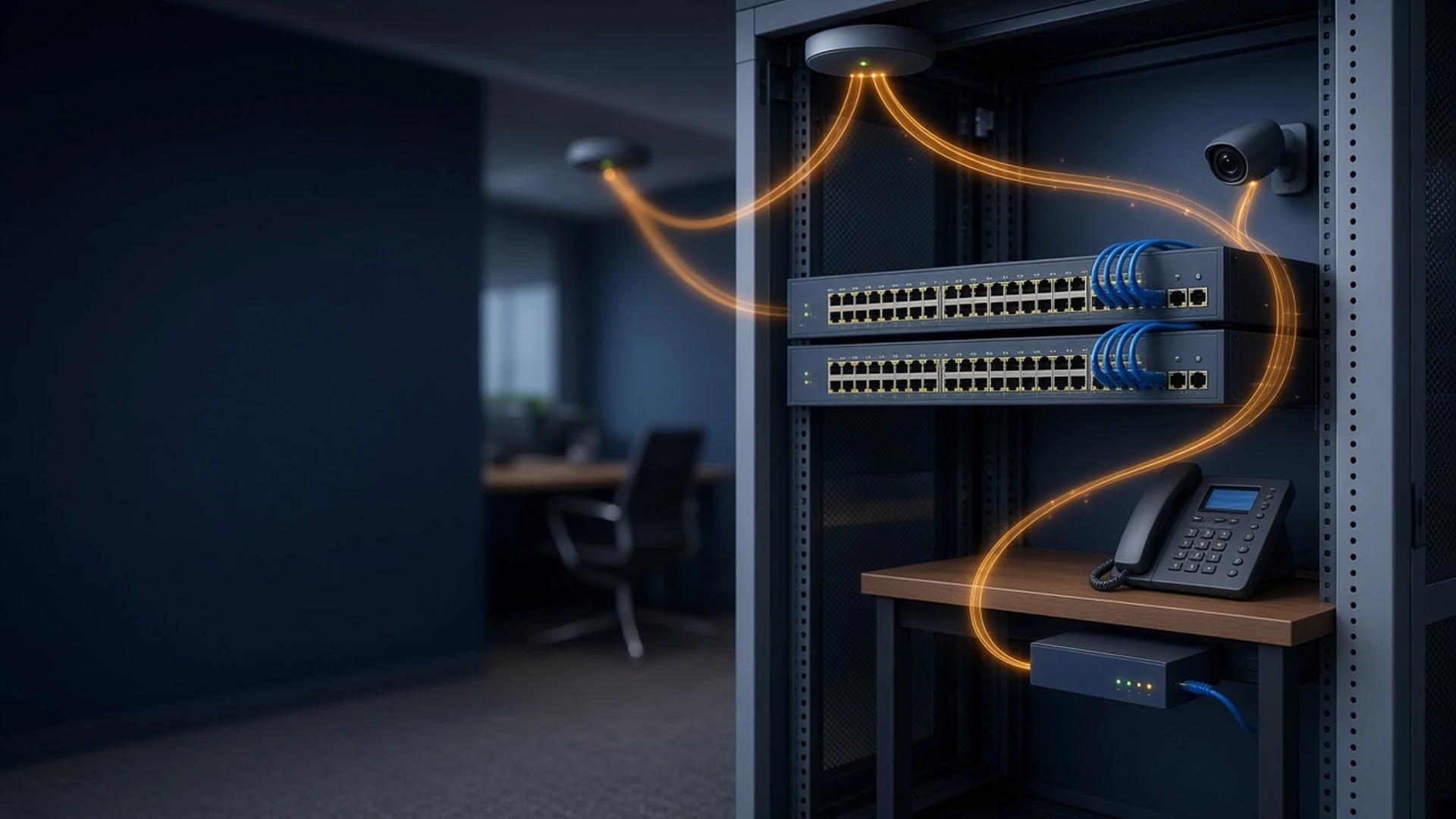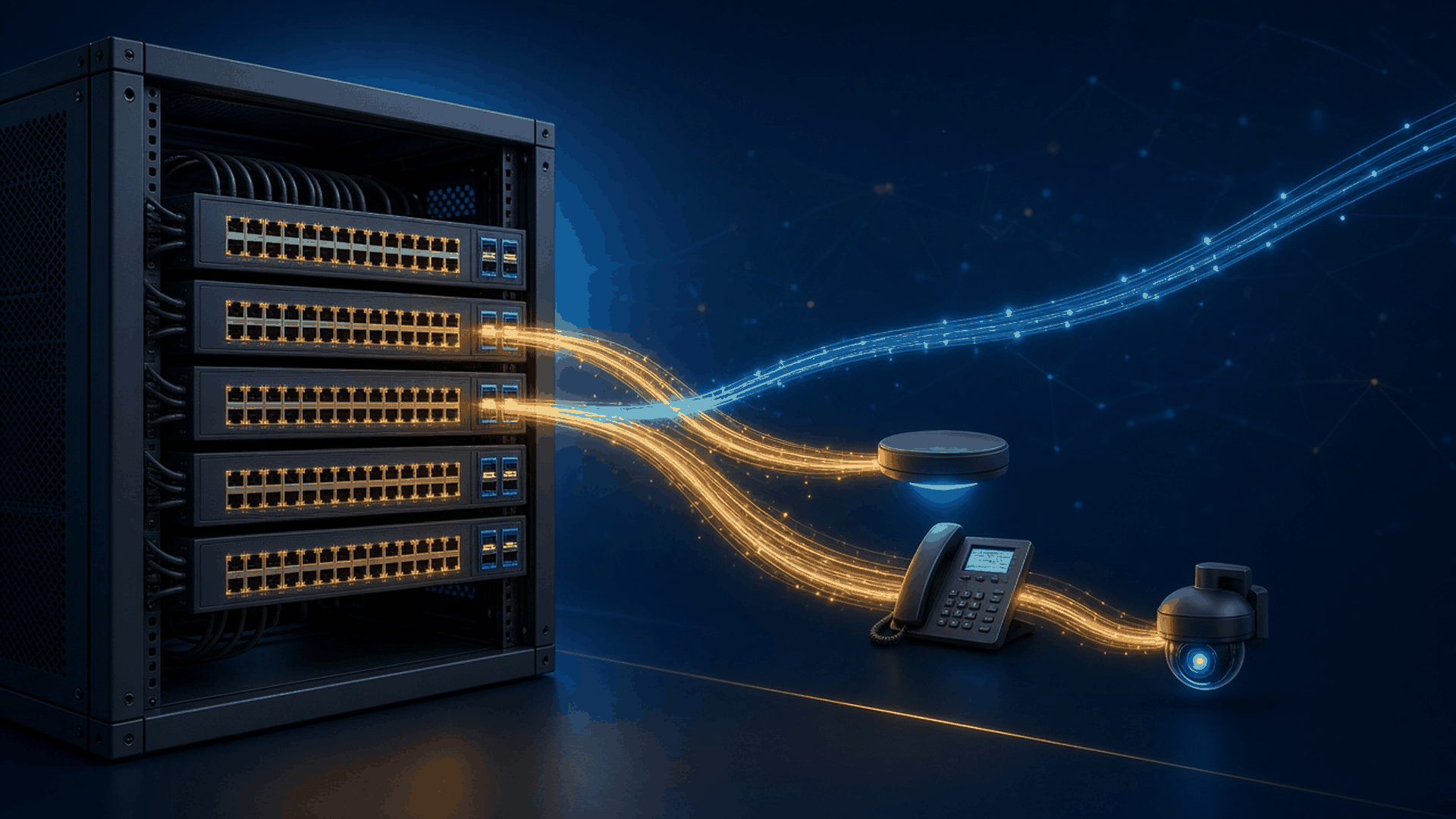
A Cisco switch is a network hardware device that forwards data between devices on the same LAN using MAC-address tables, offered in unmanaged (plug-and-play), managed (configurable, VLAN/QoS capable), and cloud-managed (Meraki dashboard) variants, across form factors from fixed 8-port desktop units to multi-rack modular chassis. Browse the full range in Cisco Switches.
Switch Types by Network Layer
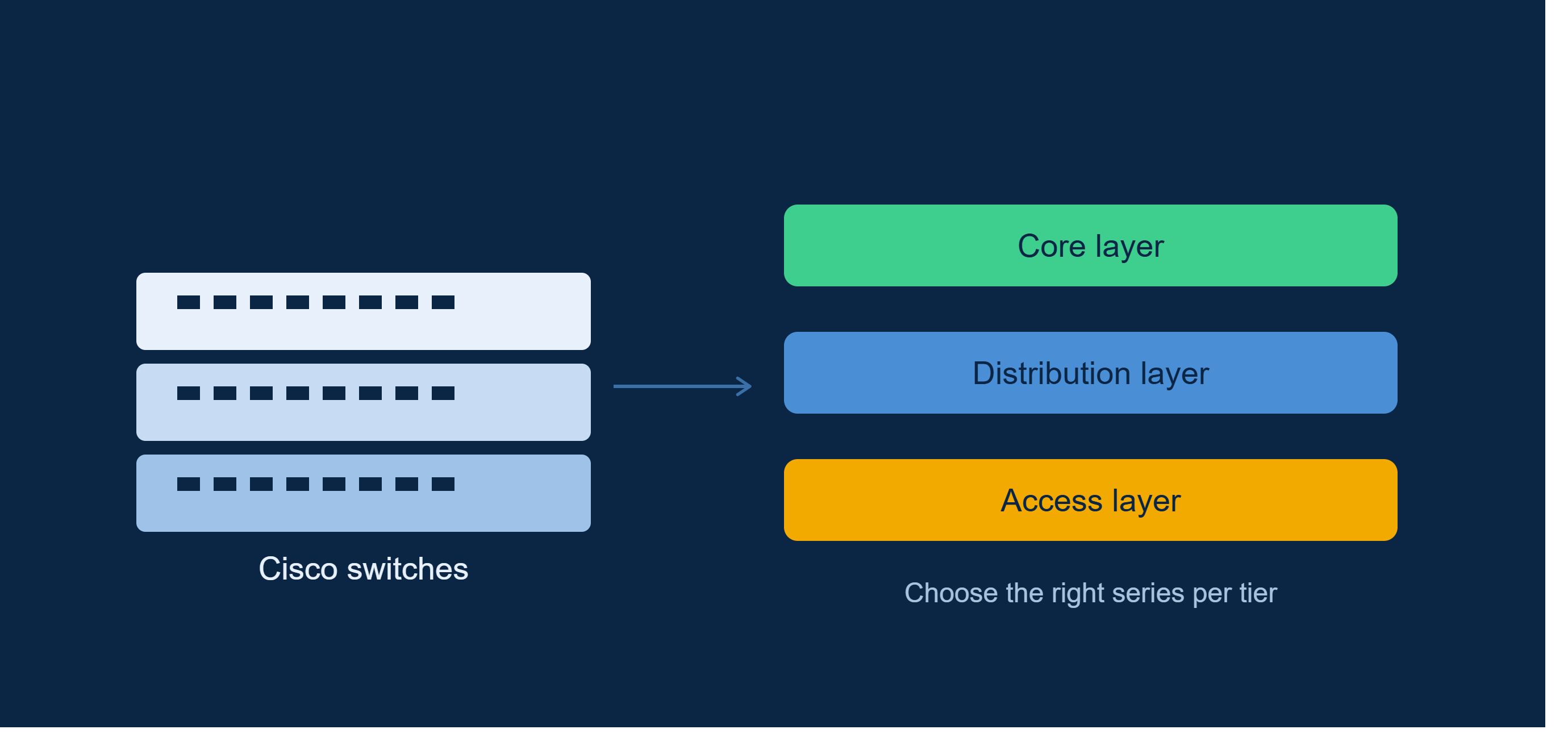
- Access layer — connects end devices (PCs, phones, APs, printers): Catalyst 1000, Catalyst 1200, Catalyst 1300, Catalyst 9200, Catalyst 9300
- Distribution layer — aggregates access switches, applies policy/routing: Catalyst 9400, Catalyst 4500, Catalyst 3850
- Core layer — high-throughput campus backbone: Catalyst 9500, Catalyst 6800
- Data center fabric — spine-leaf, VXLAN/ACI: Nexus 9000, Nexus 5000, Nexus 2000 fabric extenders
- Storage fabric (SAN) — Fibre Channel connectivity: MDS 9100, MDS 9200
- WAN edge — branch/SD-WAN termination: Catalyst 8200, Catalyst 8300, Catalyst 8500
- Cloud-managed / multi-site — Meraki MS Series
- Harsh environment — Industrial Switches, Rugged Switches, ME 3400 metro Ethernet
- Legacy / maintained networks — Catalyst 3750, Catalyst 3650, Catalyst 3560, Catalyst 2960, Catalyst 2900, Catalyst 4900
Six Specs to Check Before You Buy
- Port count & speed — 1G, 2.5G (mGig), 10G, 25G, 40G, 100G, 400G depending on tier
- PoE budget — PoE (15.4W/port), PoE+ (30W/port), UPOE (60W/port), UPOE+ (90W/port) — sum your endpoint draw, not just port count
- Uplink options — fixed SFP/SFP+ vs modular uplink modules: Cisco Expansion Modules, Cisco Switch Modules
- Stacking — StackWise / StackWise-320 / StackWise Virtual for resilience and simplified management
- Licensing tier — Network Essentials vs Network Advantage (feature/automation gating on Catalyst 9000)
- Transceivers & cabling — confirm optics compatibility via Transceivers and Network Cables
New vs. Refurbished vs. Factory-Sealed
- New — full manufacturer warranty, latest hardware revision, highest cost
- Factory Sealed — unopened OEM stock, new-in-box condition at a lower price point than list
- Refurbished — function-tested, cosmetically graded, typically the lowest cost with seller-backed warranty; ideal for labs, non-critical segments, or budget-constrained rollouts
Every product listing on mnfcollaboration.com is condition-tagged (New / Refurbished / Factory Sealed) so you can filter by budget and risk tolerance directly on the Cisco Switches category page.
Buying by Environment
- SMB / branch office — Catalyst 1000/1200/1300, SMB Switches, or Meraki MS if you need centralized multi-site dashboard control
- Enterprise campus — Catalyst 9200/9300 access, 9400/9500 distribution/core
- Data center — Nexus 9000 fabric, MDS for SAN
- Industrial / OT networks — Industrial and Rugged switches rated for temperature, vibration, and dust
- Service provider / metro — ME 3400
Also consider complementary hardware while planning your BOM: Cisco Routers, Cisco Wireless Access Points, Cisco Firewalls.
Frequently Asked Questions
How many ports do I need on a Cisco switch?
Count every device that will connect directly (PCs, phones, APs, printers, cameras), add 20–30% headroom for growth, and round up to the next standard port count (8, 24, or 48) — then confirm the PoE budget covers all powered devices at once.
What is StackWise and do I need it?
StackWise lets multiple physical switches operate as one logical unit with a single management IP and resilient failover. It's worth it for access-layer deployments where uptime matters and you want to add capacity without adding management overhead.
Is Meraki a good fit for a single-site business?
Meraki MS switches work fine for a single site, but their main advantage — centralized cloud dashboard management across many locations — is most valuable for multi-site or franchise-style deployments; a single site may not need the subscription licensing model.
Do older Catalyst switches (2960, 3560, 3750) still make sense to buy?
Yes, for maintaining existing networks already standardized on those platforms, for lab/test environments, or for budget-constrained access-layer needs where current-generation features (like higher PoE budgets or 2.5G mGig) aren't required.
What's the difference between Nexus and Catalyst switches?
Catalyst switches target campus and branch LAN environments across access, distribution, and core layers, while Nexus switches run NX-OS and are purpose-built for data center fabrics, offering higher port density and features like VXLAN and ACI integration.
Can M&F Collaboration quote a full network refresh, not just switches?
Yes — submit your requirements or bill of materials through Request a Quote for vendor-neutral, multi-vendor pricing across switches, routers, wireless, and firewalls.
Ready to Source Your Next Deployment?
Request a Quote with your requirements or BOM for same-day, vendor-neutral pricing — or browse the full Cisco Switches catalog.