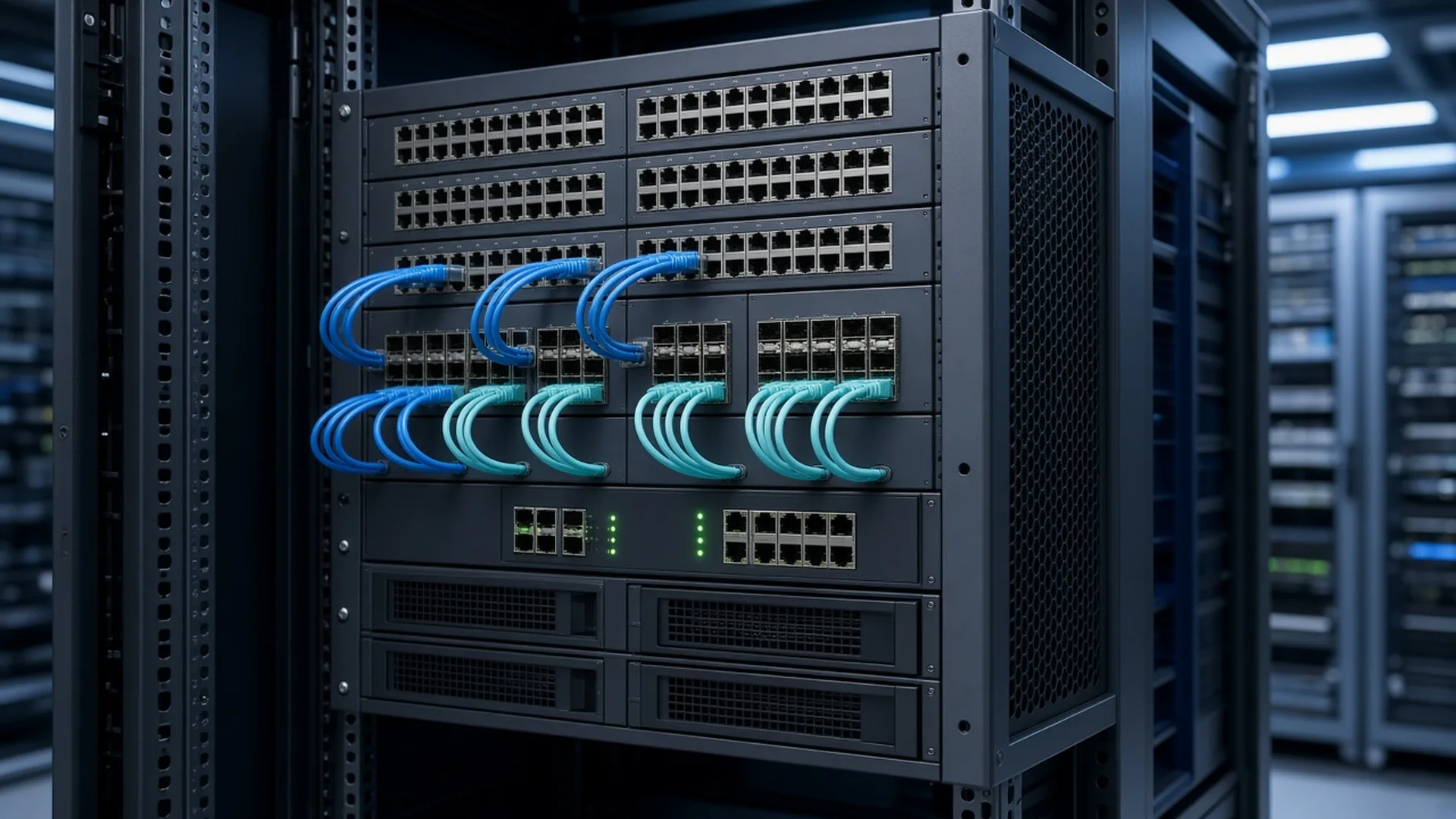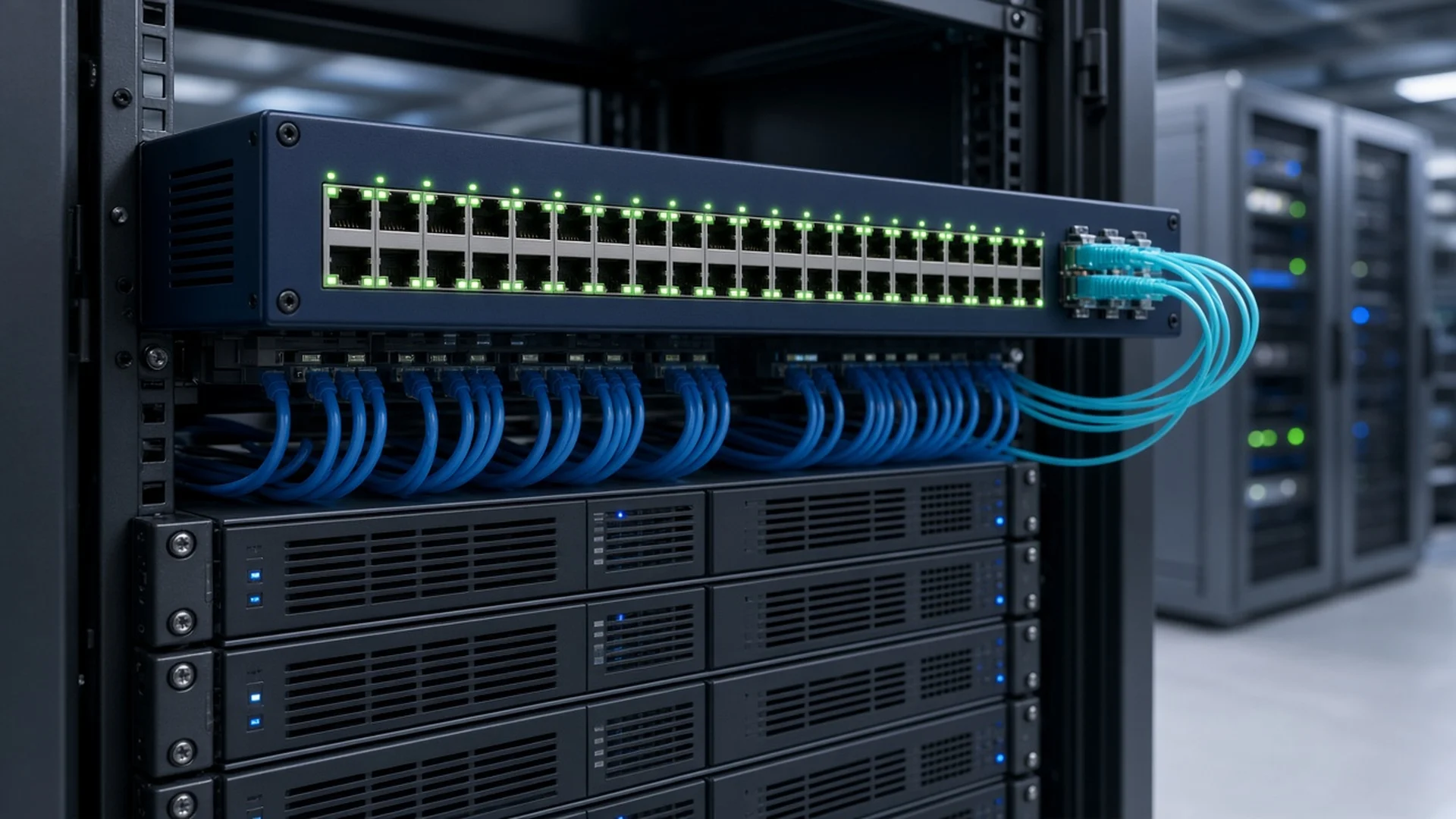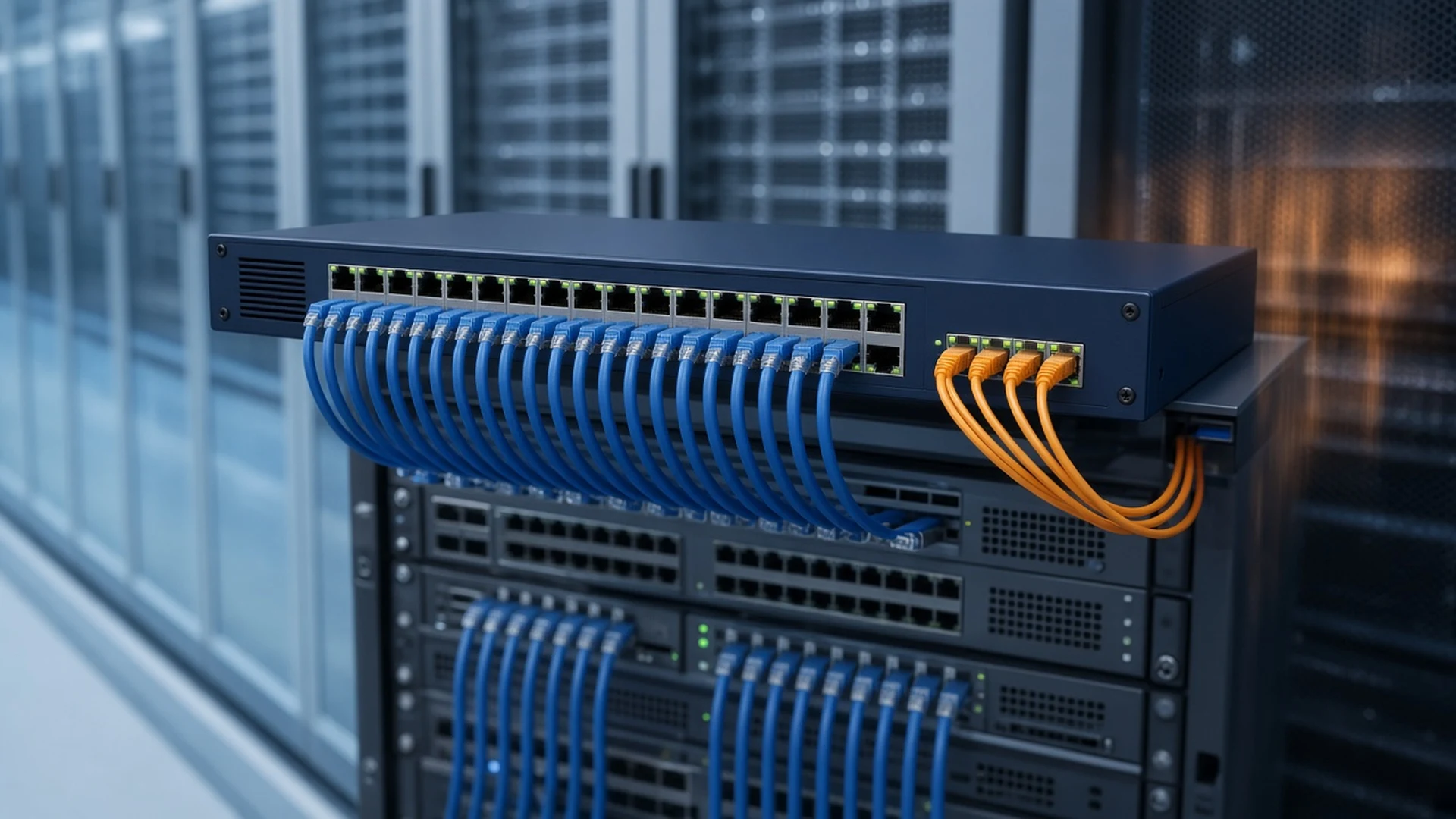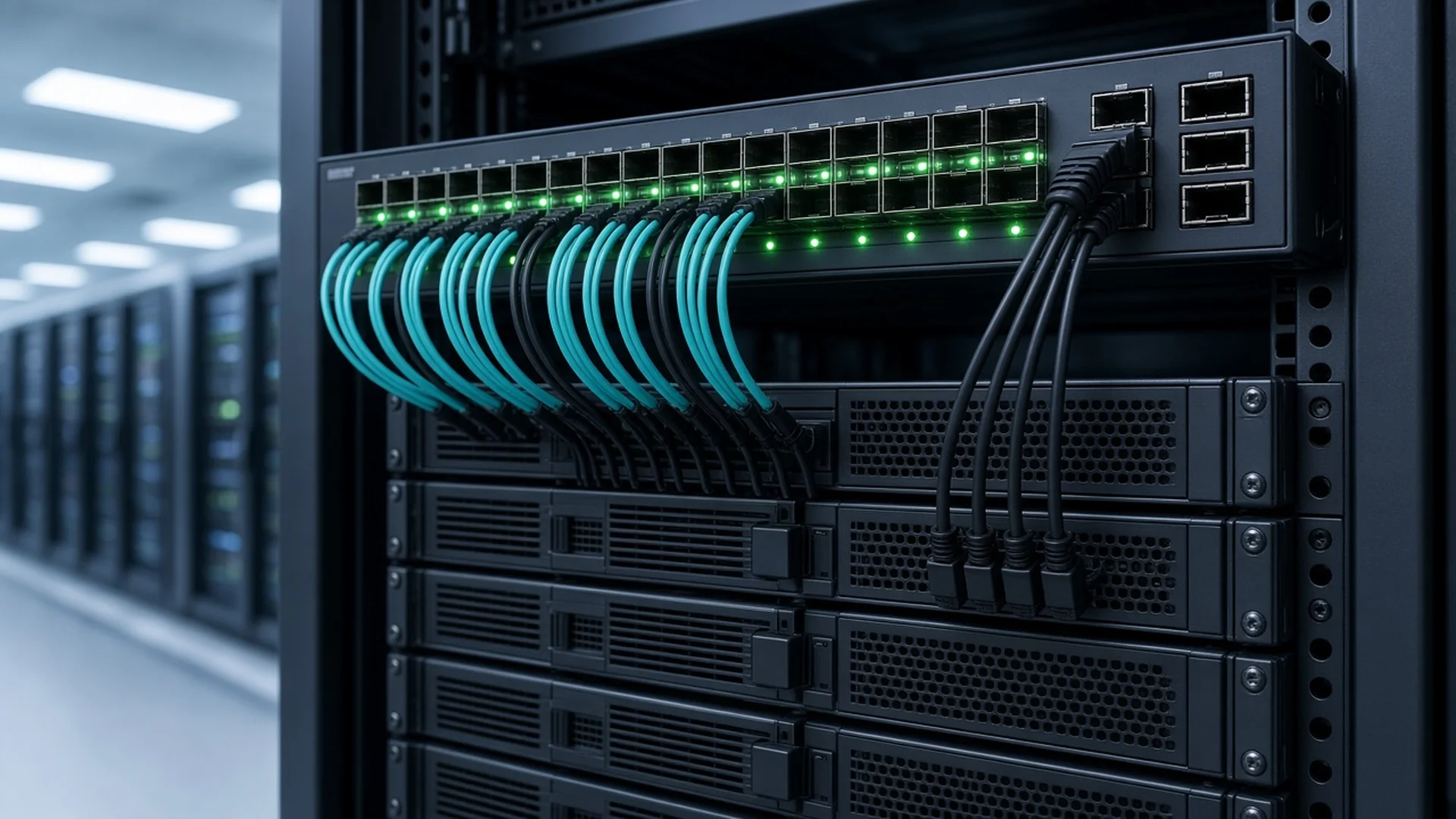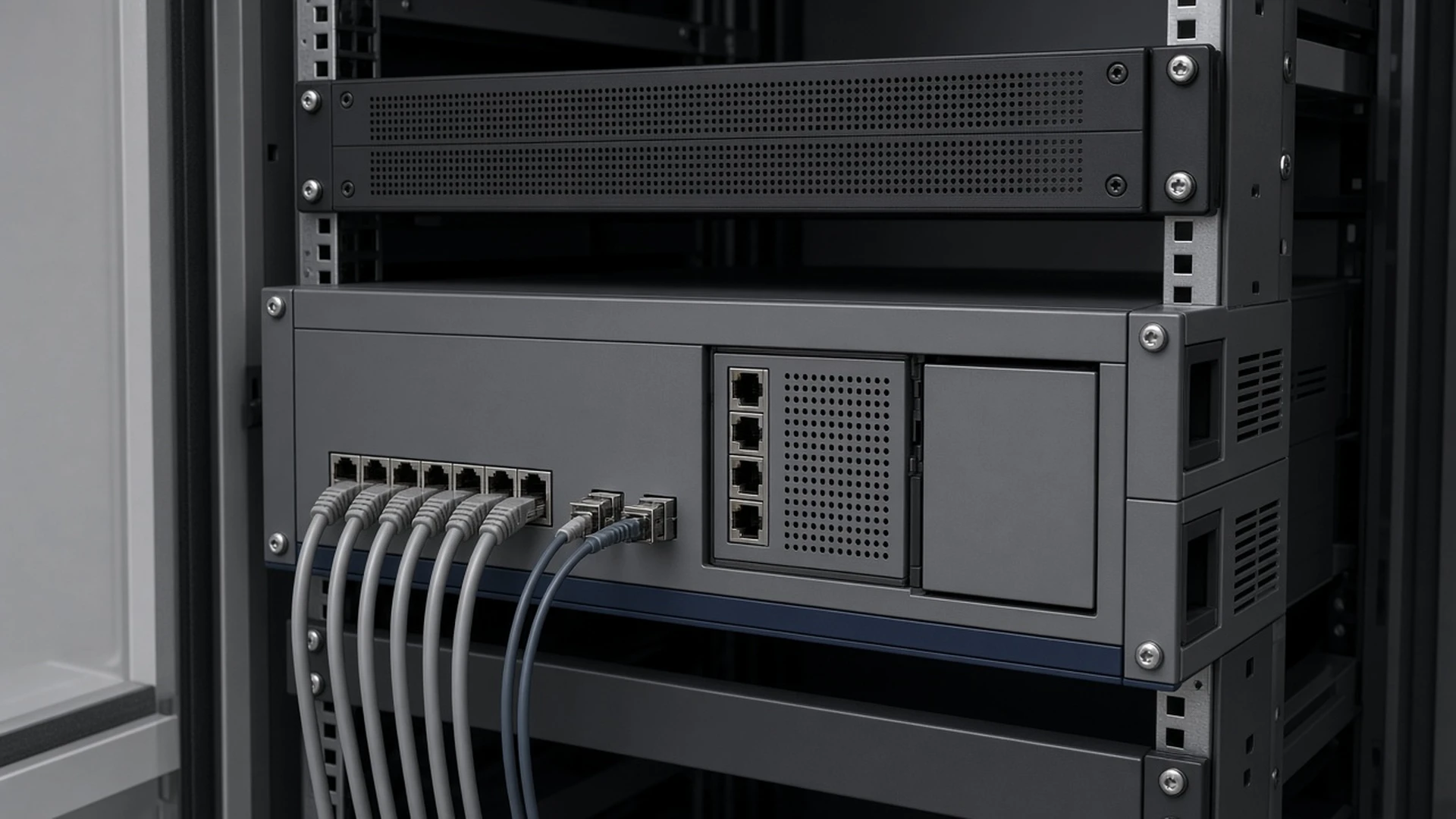


The Cisco Catalyst 8300 Series Edge Platforms are Cisco's modular SD-WAN and branch routers for medium and large sites, and Cisco describes them as the evolution of the ISR 4400. Our Cisco Catalyst 8300 Edge Platforms category lists all four chassis. This guide covers ports, slots, module reuse, power, licensing and the new end-of-sale dates, so you can order the right unit the first time.
Short answer: Choose the 1RU C8300-1N1S models for a branch with one or two expansion modules, and the 2RU C8300-2N2S models when you need more slots, double-wide modules or 10G WAN with headroom. Pick a -4T2X model if your WAN or core uplink is 10 Gigabit. Cisco has announced end of sale for all four, with support running into 2032.
What is the Cisco Catalyst 8300 built for?
The Catalyst 8300 is a branch WAN edge router that runs Cisco IOS XE in either autonomous mode for traditional routing or controller mode for Catalyst SD-WAN, from one software image. Cisco positions it for medium and large branches that need high IPsec throughput, voice, embedded security and modular WAN, LAN and cellular options.
Every model has six built-in Layer 3 Ethernet ports, 8 GB of DRAM upgradeable to 16 GB or 32 GB, 8 GB of on-board flash and a 16 GB M.2 USB drive. Every chassis also ships with dual power supplies. On-box security includes an application-aware firewall, Snort IPS, URL filtering and Cisco Umbrella integration, and Cisco uses a dedicated crypto chip to offload IPsec.
Three details catch buyers out. There is no out-of-band management port, so plan in-band management. ISSU is not supported. And unlike the ISR 4000, the Catalyst 8300 does not run Call Manager Express on the box, though SRST and CUBE are supported.
Which Catalyst 8300 model should you choose?
The part number tells you the layout. 1N1S means one NIM slot and one service module (SM) slot in 1RU, and 2N2S means two of each in 2RU. 6T means six 1 Gigabit ports, and 4T2X means four 1 Gigabit ports plus two 10 Gigabit SFP+ ports. Every model adds one PIM slot for LTE or 5G.
| Model | On our site | Size and slots | Built-in ports | SD-WAN IPsec (IMIX) |
|---|---|---|---|---|
| C8300-1N1S-6T | C8300-1N1S-6T | 1RU, 1 SM, 1 NIM, 1 PIM | 4 × 1G RJ-45, 2 × 1G SFP | 1.8 Gbps |
| C8300-1N1S-4T2X | C8300-1N1S-4T2X | 1RU, 1 SM, 1 NIM, 1 PIM | 4 × 1G RJ-45, 2 × 10G SFP+ | 6.3 Gbps |
| C8300-2N2S-6T | C8300-2N2S-6T | 2RU, 2 SM, 2 NIM, 1 PIM | 4 × 1G RJ-45, 2 × 1G SFP | 1.8 Gbps |
| C8300-2N2S-4T2X | C8300-2N2S-4T2X, refurbished | 2RU, 2 SM, 2 NIM, 1 PIM | 4 × 1G RJ-45, 2 × 10G SFP+ | 7.6 Gbps |
Cisco quotes SD-WAN IPsec at 1400-byte packets of up to 18.8 Gbps on the C8300-2N2S-4T2X, up to 17 Gbps on the C8300-1N1S-4T2X and up to 2 Gbps on both 6T models. All four forward IPv4 at up to 19.7 Gbps and support 6,000 SD-WAN overlay tunnels. The C8300-2N2S-4T2X is also the only 12-core model, and the only one with WAN MACsec on its front-panel 10G ports.
In practice the 6T models fit branches with circuits under 2 Gbps that need slots for voice, serial or switch modules. The 4T2X models fit sites with 10G handoffs or heavy encrypted traffic. Refurbished -RF units are the same hardware as new, so confirm condition, power supplies and installed modules on the quote.
Can you reuse ISR 4000 modules in a Catalyst 8300?
Mostly, yes. Cisco states that over 70% of ISR 4000 modules are reused on the Catalyst 8300, including most NIMs and SM-X modules. A few are excluded, so check every module PID against Cisco's list before you move hardware from an ISR 4000 chassis into a Catalyst 8300.
The exclusions Cisco names are the NIM-1GE-CU-SFP and NIM-2GE-CU-SFP, the older SM-X EtherSwitch and Gigabit Ethernet service modules, and first- and second-generation UCS-E compute modules. For analog FXS, only the newer "P" version NIMs work. Double-wide service modules fit only the 2RU models.
The Catalyst 8300 also adds modules the ISR 4000 can't use. The C-NIM-4X gives four 1/10G SFP+ ports and the C-NIM-8T gives eight Gigabit ports, both switchable between Layer 2 and Layer 3 with MACsec. Cisco's SM-to-NIM adapter fits two NIMs in one SM slot, for up to three NIMs in a 1RU chassis or six in a 2RU chassis.
For cellular, the PIM slot takes pluggable modules such as the P-LTEAP18-GL CAT18 LTE module, with 5G options in the same slot. The built-in SFP ports take the SFPs supported on the ISR 4000 except 100 Mbps SFPs, and the 4T2X models take 10G optics such as the SFP-10G-SR.
What power and rack space does a Catalyst 8300 need?
The 1RU models measure 1.73 × 17.50 × 16.25 inches and weigh about 20 lbs. The 2RU models measure 3.5 × 17.25 × 18.52 inches and weigh about 40 lbs. Both ship with two hot-swappable power supplies and a 19-inch rack kit, and both operate from 0 to 40°C.
The default supplies are 250 W AC on 1RU models and 650 W AC on 2RU models. The built-in Ethernet ports don't provide PoE, so PoE on a NIM or SM needs at least one PoE supply: the 500 W AC PoE supply with a 250 W PoE budget on 1RU, or the 1000 W AC PoE supply with a 500 W budget on 2RU. DC supplies are available, and only the 2RU models offer reverse-airflow NEBS DC power.
Cisco lists typical power with no modules and one supply at 82 W for the C8300-1N1S-6T, 89 W for the C8300-2N2S-6T, 245 W for the C8300-1N1S-4T2X and 275 W for the C8300-2N2S-4T2X.
How is the Catalyst 8300 licensed?
Cisco sells the Catalyst 8300 only with a software subscription, and the three Cisco names are Catalyst Routing Essentials, Cisco DNA Essentials and Cisco DNA Advantage. Hardware alone doesn't entitle you to run the router in either mode, so plan the subscription tier alongside the chassis on every order.
Cisco DNA Essentials and Cisco DNA Advantage include a perpetual network stack, Network Essentials or Network Advantage, for autonomous mode, plus a term-based Cisco DNA stack for SD-WAN and controller management. Catalyst Routing Essentials is a 7-year term license for traditional routing and on-premises SD-Routing only. It has no perpetual stack, no SD-WAN entitlement and no voice entitlements.
Two features need Cisco DNA Advantage: MPLS and the voice modules (FXS, FXO, BRI, E&M, T1/E1 and DSP). CUBE needs at least Cisco DNA Essentials. Bandwidth tiers matter too. Cisco says Tier 3 unlocks full throughput on the 4T2X models and Tier 2 on the 6T models.
Encryption needs an HSEC license. Without it, Cisco limits the router to 1,000 secure tunnels and 250 Mbps of encrypted throughput. HSEC is included with Cisco DNA subscriptions and is tied to the chassis serial number, so confirm license and HSEC status on any refurbished unit before you plan above 250 Mbps.
When does Cisco support for the Catalyst 8300 end?
Cisco announced end of sale for all four Catalyst 8300 models on July 27, 2026, in two bulletins. The 1RU models stop selling on January 31, 2027, and the 2RU models on July 31, 2027. Support continues until January 31, 2032 for 1RU models and July 31, 2032 for 2RU models.
Bulletin EOL15950 covers the C8300-1N1S-4T2X and C8300-1N1S-6T. Last ship is April 30, 2027, software maintenance releases end on March 30, 2031, and security fixes continue to January 31, 2032. Cisco names a C8300 Series Secure Router as the migration for both 1RU models.
Bulletin EOL15955 covers the C8300-2N2S-4T2X and C8300-2N2S-6T. Last ship is October 31, 2027, software maintenance releases end on March 30, 2031, and security fixes continue to July 31, 2032. Cisco lists no migration product for the 2RU models yet. For all four, the last supported IOS XE train is 28.2.x.
That leaves a long, supported life for spares, expansions and like-for-like replacements. If you are weighing the newer Secure Routers or the Catalyst 8200 and 8500 instead, our Cisco 8000 Series router buying guide compares the families, and our ISR router buying guide covers the ISR 4000 you may be replacing.
What should a Catalyst 8300 RFQ include?
- Site role and the WAN circuits, with speed and media (copper, 1G SFP or 10G SFP+)
- Encrypted throughput target, and whether you run SD-WAN or autonomous mode
- Modules to reuse from an ISR 4000, listed by PID
- New modules needed: NIMs, SMs, PIM cellular and optics
- PoE needs, and AC or DC power
- Subscription tier, and whether you already hold licenses and HSEC
- Condition, new or refurbished, and quantity
Cisco Catalyst 8300 FAQ
What is the difference between the 6T and 4T2X models?
Both have six built-in Ethernet ports. The 6T models have four 1G RJ-45 ports and two 1G SFP ports, while the 4T2X models replace the two SFP ports with 10G SFP+ ports. Cisco rates SD-WAN IPsec IMIX at 1.8 Gbps on both 6T models, against 6.3 Gbps and 7.6 Gbps on the 4T2X models.
Does the Catalyst 8300 replace the ISR 4000?
Yes. Cisco describes the Catalyst 8300 as the evolution of the ISR 4400 and reuses over 70% of ISR 4000 modules. Check each module PID first, because Cisco excludes some, including the NIM-1GE-CU-SFP and NIM-2GE-CU-SFP.
Which licenses does a Catalyst 8300 need?
Every Catalyst 8300 needs a subscription: Catalyst Routing Essentials, Cisco DNA Essentials or Cisco DNA Advantage. Encrypted throughput above 250 Mbps also needs an HSEC license, which Cisco includes with Cisco DNA subscriptions. MPLS and voice modules require Cisco DNA Advantage.
Has Cisco announced end of sale for the Catalyst 8300?
Yes. Cisco announced it on July 27, 2026. End of sale is January 31, 2027 for the 1RU models and July 31, 2027 for the 2RU models. Last Date of Support is January 31, 2032 for 1RU models and July 31, 2032 for 2RU models.
Do the built-in Ethernet ports provide PoE?
No. PoE on a Catalyst 8300 comes from modules such as the NIM-ES2-8-P and Cisco's PoE-capable LANWAN NIMs and switch service modules, and it needs at least one PoE power supply installed.
Can a Catalyst 8300 use 5G?
Yes. The PIM slot on every model takes Cisco's pluggable LTE and 5G modules, and the routers also work with external Cisco cellular gateways. Only one pluggable cellular module fits, since there is one PIM slot.
About this guide
Prepared by M&F Collaboration, a B2B reseller of Cisco networking, collaboration, power, and UCS hardware based in West Chicago, Illinois. Model, port, module, power, licensing and lifecycle details were checked against Cisco's Catalyst 8300 Series Edge Platforms data sheet and Cisco's end-of-life bulletins. When a marketplace listing title disagrees with Cisco's data sheet, we follow the data sheet.
Need a Catalyst 8300 for your branch?
Send us the WAN speeds and media, your encrypted throughput target, the ISR 4000 modules you want to reuse and your license plan. We will match new or refurbished Catalyst 8300 chassis, modules and optics to your design.
Prefer to browse first? Explore these categories: